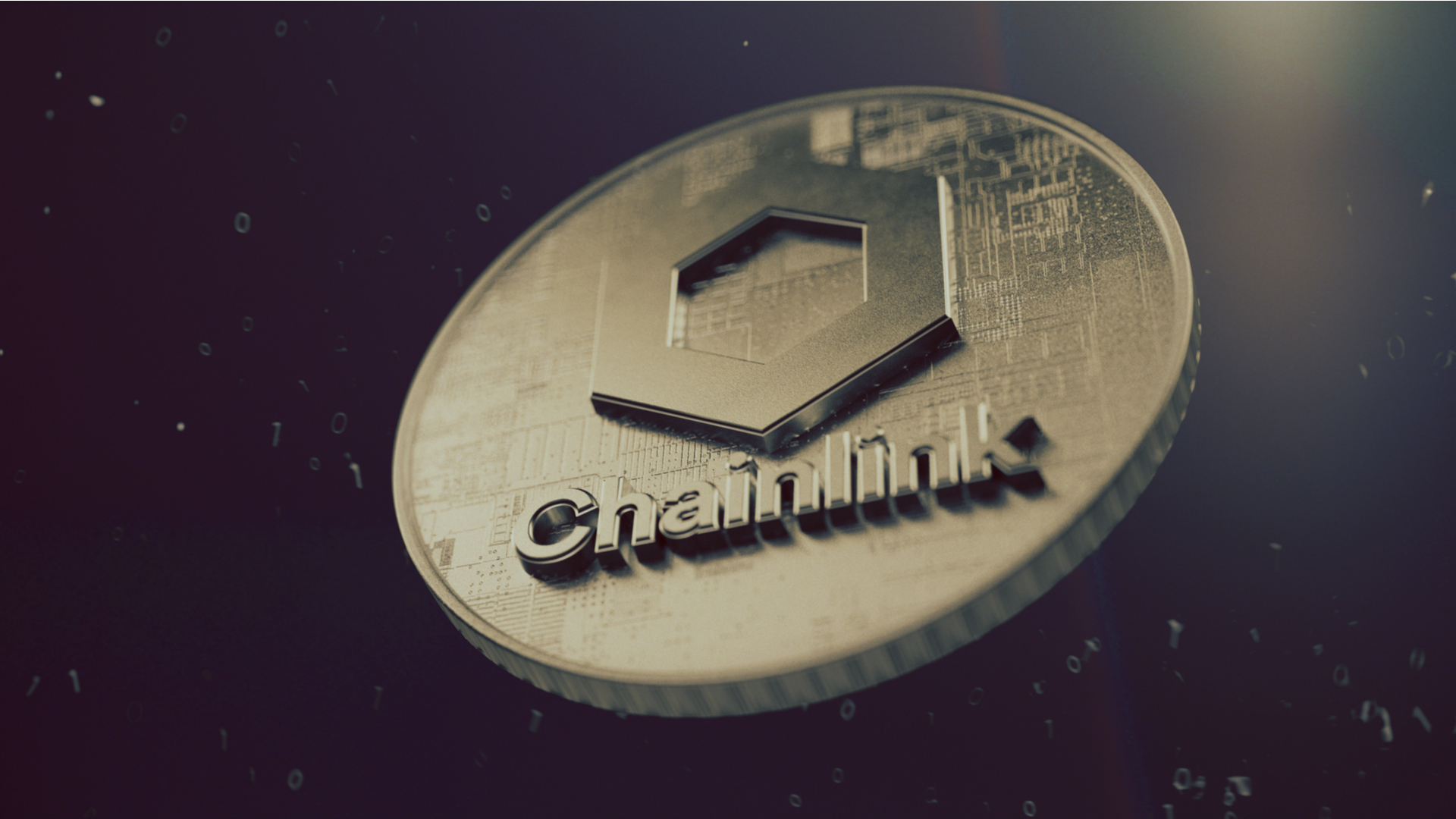

Chainlink (LINK)
Loading chart…
Show chart data as a table
Chart: TradingView Lightweight Charts™ · Data: CoinMarketCap
Chainlink value in USD
Conversions using the latest available price. Excludes fees and the bid-ask spread.
| LINK amount | Value |
|---|---|
| 0.001 LINK | $0.0116 |
| 0.01 LINK | $0.1157 |
| 0.1 LINK | $1.16 |
| 1 LINK | $11.57 |
| 10 LINK | $115.72 |
| Budget | Estimated amount of LINK |
|---|---|
| $100.00 | 8.64191213 LINK |
| $500.00 | 43.20956064 LINK |
| $1,000.00 | 86.41912128 LINK |
| $5,000.00 | 432.09560639 LINK |
| $10,000.00 | 864.19121278 LINK |
Chainlink in brief
Chainlink (LINK) is a decentralised oracle network that feeds real-world data such as prices into smart contracts and connects blockchains with each other. The LINK token pays for these services and is used for staking.
Official source: docs.chain.link
Safety note: download wallets and apps only from the official site, and beware of unsolicited "support" accounts and fake airdrop sites.
Where does Chainlink trade against the Turkish lira?
- Binance TR
- BtcTurk
- OKX TR
- Paribu
On this page 7
Chainlink is a decentralised oracle network that delivers off-chain data to smart contracts in a reliable way, and LINK is its token. Founded by Sergey Nazarov and Steve Ellis, the project published its white paper and held a token sale in 2017, then launched on mainnet in May 2019. Much of the price data used by major DeFi protocols such as Aave now comes from Chainlink.
What is the oracle problem?
Blockchains can verify data that lives on-chain, but they cannot see the outside world. A lending protocol, for example, needs to know the dollar price of ETH to value its collateral. Pulling that price from a single source makes it a single point of failure: if the data is wrong or manipulated, the protocol can liquidate positions incorrectly. The oracle problem is the challenge of bringing external data on-chain in a trustworthy way.
How does Chainlink work?
In Chainlink, independent node operators collect data from multiple sources and aggregate their answers before writing the result on-chain, so no single operator’s mistake or bad intent can decide the outcome. Its main services include:
- Data Feeds: on-chain price data for cryptocurrencies, FX rates and commodities, updated when the price moves by a set percentage or after a set amount of time.
- CCIP: the Cross-Chain Interoperability Protocol, launched in July 2023, moves tokens and messages between different blockchains.
- VRF: verifiable random numbers for games and NFT draws.
- Automation and Proof of Reserve: triggering contracts automatically when conditions are met, and verifying the reserves behind assets such as stablecoins on-chain.
Chainlink price feeds run on dozens of blockchains and are used by lending, derivatives and stablecoin protocols, making Chainlink one of the core building blocks of DeFi. The project has also drawn interest from traditional finance: in 2023, the global banking messaging network SWIFT used Chainlink infrastructure in experiments on moving tokenised assets between different blockchains.
What is the LINK token used for?
LINK is used to pay Chainlink node operators for their services. Through the staking programme launched in December 2022, LINK holders and node operators can stake tokens to help secure the network and earn rewards; operators who misbehave can have part of their staked LINK slashed. Staking pools have limited capacity and open in phases.
Because LINK is a token on Ethereum, sending it on Ethereum requires enough ETH in your wallet to cover the fee; the same goes for versions of LINK on other chains, which need that chain’s native coin for gas.
LINK supply
LINK’s total supply is fixed at 1 billion, and no new LINK is created. The token was issued on Ethereum under ERC-677, a standard compatible with ERC-20, and bridged versions exist on other networks. In the 2017 token sale, 35% of the supply was sold; the rest was set aside for node operator incentives and the company developing Chainlink. As these reserved tokens are released over time, circulating supply gradually increases.
What are the risks of Chainlink?
LINK is volatile. The large share of tokens not yet in circulation can create selling pressure when it is released. Widespread use of Chainlink’s services does not automatically translate into proportional demand for LINK, and the network’s economic model is still evolving. Rival oracle networks such as Pyth also compete for market share. Finally, when holding LINK on other networks, verify the official contract address and keep the risks of bridged versions in mind.
How to read LINK market data
LINK’s maximum supply is 1 billion; the gap between circulating supply and that ceiling shows tokens that have not yet reached the market, which is a key part of reading its tokenomics. Metrics such as the number of protocols using Chainlink and the total value it helps secure show adoption, but they are not directly tied to the LINK price.