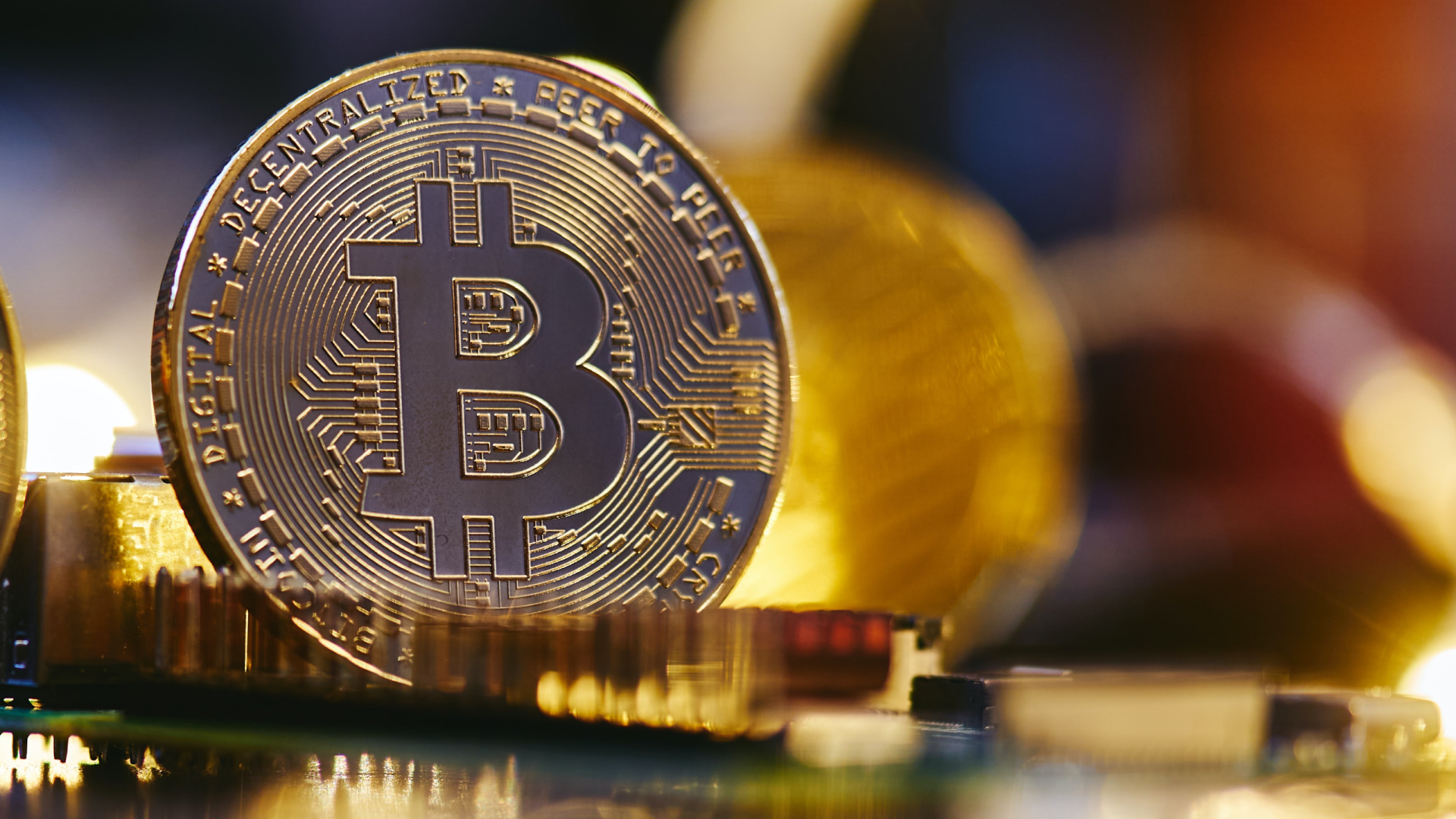
What is Bitcoin?
Bitcoin is an open payment network, and the native currency of that network (BTC), that lets people send value over the internet without a bank or other intermediary. Its supply is capped at 21 million.
On this page 8
Bitcoin is an open payment network, and the native currency of that network, that lets people send value over the internet without a bank or any other intermediary. The currency trades under the ticker BTC. Its ledger is kept not by one institution but by independent computers around the world running the same rules, and its total supply is capped at roughly 21 million coins.
Bitcoin was the first cryptocurrency and remains the largest. Most of what came after it builds on the ideas it introduced: a shared ledger, cryptographic signatures and a network secured by mining.
Who created Bitcoin, and when?
The Bitcoin whitepaper was published on October 31, 2008, under the pseudonym Satoshi Nakamoto. The network went live on January 3, 2009, when the first block, known as the genesis block, was mined. Satoshi’s real identity is still unknown, and they stepped away from the project after 2010.
The first widely cited commercial use came in May 2010, when a programmer paid 10,000 BTC for two pizzas. Since then Bitcoin has grown into an asset that trades on exchanges worldwide, has had spot ETFs in the US since January 2024, and sits on the balance sheets of public companies.
How does Bitcoin work?
When you send bitcoin, your wallet signs the transaction with your private key and broadcasts it. Computers running full nodes check that the signature is valid and that the coins being spent actually exist. Valid transactions are grouped into blocks, each cryptographically linked to the one before it. That chain of blocks is the blockchain.
Blocks are produced by miners. Bitcoin mining uses Proof of Work: miners repeatedly hash candidate blocks until one meets a target. Finding that answer takes enormous computing effort; checking it takes a fraction of a second. A difficulty adjustment keeps the average pace at about one block every ten minutes.
Even a very powerful miner can’t sneak through a block that breaks the rules, because nodes simply reject it. Short-lived forks do happen, and when they do Bitcoin follows the valid chain with the most accumulated work. Each block added on top of yours makes it harder to reverse, which is why six confirmations is a common rule of thumb for large payments.
The 21 million cap, halvings and satoshis
Bitcoin’s code ensures that no more than 21 million BTC will ever exist. New coins enter circulation as the block reward paid to miners, and that reward is cut in half every 210,000 blocks, roughly every four years. This is the halving. The reward started at 50 BTC in 2009 and fell to 3.125 BTC at the most recent halving in April 2024. The last bitcoin is expected to be mined around 2140.
Each bitcoin divides into 100 million satoshis, or sats. You don’t need to buy a whole coin: 0.001 BTC is 100,000 sats, and most exchanges let you buy a few dollars’ worth.
The fixed supply is why Bitcoin is often called “digital gold,” but scarcity alone doesn’t set the price. Demand, liquidity and the wider economy do. A share of early coins is believed to be permanently lost because their keys are gone, though no one knows the exact amount.
How do you send bitcoin, and how long does it take?
To send BTC you need the recipient’s address, the amount, and a fee. The transaction first sits in the mempool, then gets its first confirmation once it’s included in a block. Blocks average ten minutes, but if the network is busy and you chose a low fee, you may wait longer.
Fees depend on the transaction’s data size and current demand for block space, not on the amount sent. A $100 payment and a $100,000 payment can cost the same. Our Bitcoin transfer guide walks through it step by step. There is no help desk that can reverse a confirmed transaction, so double-check the address and network before you hit send.
Where is bitcoin stored?
Your bitcoin isn’t a file inside your wallet; the record lives on the blockchain. What the wallet stores is the private key that lets you spend it. The 12- or 24-word recovery phrase you write down at setup can rebuild those keys on a new device if your phone dies.
Whoever has those words has your bitcoin. Never share them with “support staff,” never type them into a website, and don’t keep them as a screenshot. Coins held on an exchange are controlled by the exchange’s keys: easier to use, but your ability to withdraw depends on that company staying solvent and online. Our guide on choosing a crypto wallet compares the options.
Is Bitcoin anonymous?
No. Bitcoin is pseudonymous. Addresses don’t carry names, but every transaction is public and can be traced with a block explorer. Once an address is tied to you, for example by withdrawing to it from an exchange where you passed identity checks, its history can be linked to you too.
What is Bitcoin used for?
- Store of value: its fixed supply leads many individuals and institutions to hold it long term.
- Cross-border transfers: it moves 24/7, with no banking hours or holidays.
- Payments: second-layer systems such as the Lightning Network make small, fast payments practical.
Bitcoin is not a share in a company and pays no dividends. Its price can swing sharply, and the security of the network says nothing about the security of the platform you buy it on. If you’re ready to get started, our how to buy Bitcoin guide covers the practical steps.
Sources
Read next
Related news
Topic archive ↗
Bitcoin and Altcoins: Market Overview (October 26, 2026)

Lost Bitcoin While Trying to Speed Up a Transaction: Beware This Wallet Vulnerability

Türkiye’s 9 Most-Searched Altcoins and Bitcoin Last Week (October 17–23)
Bitcoin and Altcoins: Market Overview (October 25, 2026)

Bitcoin’s Drop Takes a Bigger Toll: 201,000 Investors Liquidated