
A Rare Bitcoin Setup Last Seen in 2014: What’s Different This Time as the Dollar Rises?

As Bitcoin enters one of the rare periods when it has shown a notable relationship with Nasdaq, the dollar, and gold at the same time, a CryptoQuant analysis highlights that Bitcoin is rising this time despite the dollar also strengthening.
In a 90-trading-day assessment ending on October 8, 2026, Bitcoin’s daily returns showed a correlation of +0.42 with Nasdaq, −0.36 with the U.S. Dollar Index, and +0.51 with gold. These coefficients point to a relationship in which daily moves are in the same direction as Nasdaq and gold, and in the opposite direction to the dollar.
Why is it notable to see all three relationships at once?
According to the analysis, these three relationships were simultaneously pronounced on only 11 percent of the days examined since 2014. This pattern appeared during the August 2020–January 2021 and September 2022–June 2023 periods; the latest period began on June 12, 2026.
The latest correlation with gold is higher than approximately 99 percent of historical 90-day readings. By contrast, between 2014 and 2019, Bitcoin showed no reliable relationship with any of these three markets on 81 percent of days.

The dollar rose, and Bitcoin gained 29 percent
In the previous two comparable periods, the dollar fell by 2.9 percent and 4.6 percent, respectively, while Bitcoin rose. In the latest period, however, Bitcoin gained 29 percent from June 12 through the date covered by the analysis, despite the Dollar Index rising 2.4 percent.
The fact that daily returns show an inverse relationship does not prevent both assets from rising by the end of a period spanning several months. The difference highlighted by the analysis is that, this time, the dollar has not declined in a way that supported Bitcoin as it did in previous examples.
The assessment notes that, amid the Fed raising rates on September 16 and the 10-year U.S. Treasury yield approaching a 24-year high, most of Bitcoin’s rise cannot be explained by these three markets. The analysis interprets this as evidence pointing to the role of Bitcoin-specific demand.
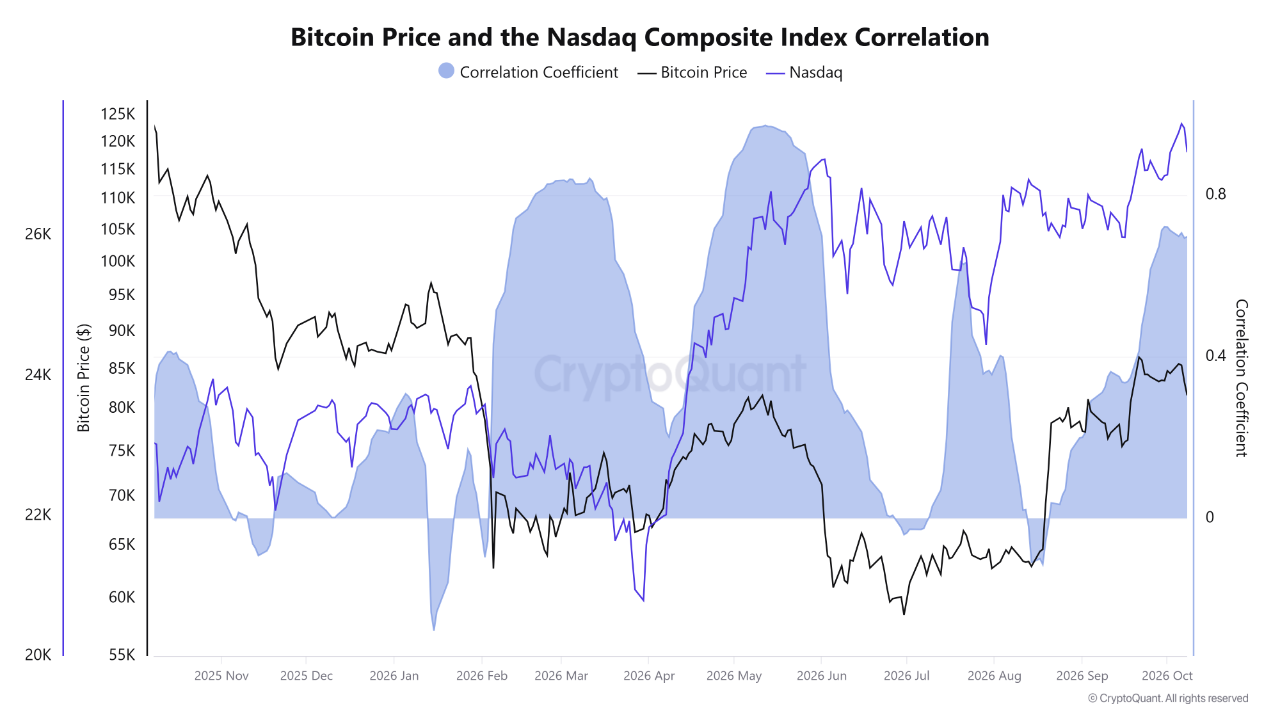
Could a strong dollar make it harder for Bitcoin to rise?
If the current relationships continue, further dollar strength is more likely to put pressure on Bitcoin, while a weakening dollar is more likely to provide support. If the correlations approach zero, the basis for this assessment will also weaken.
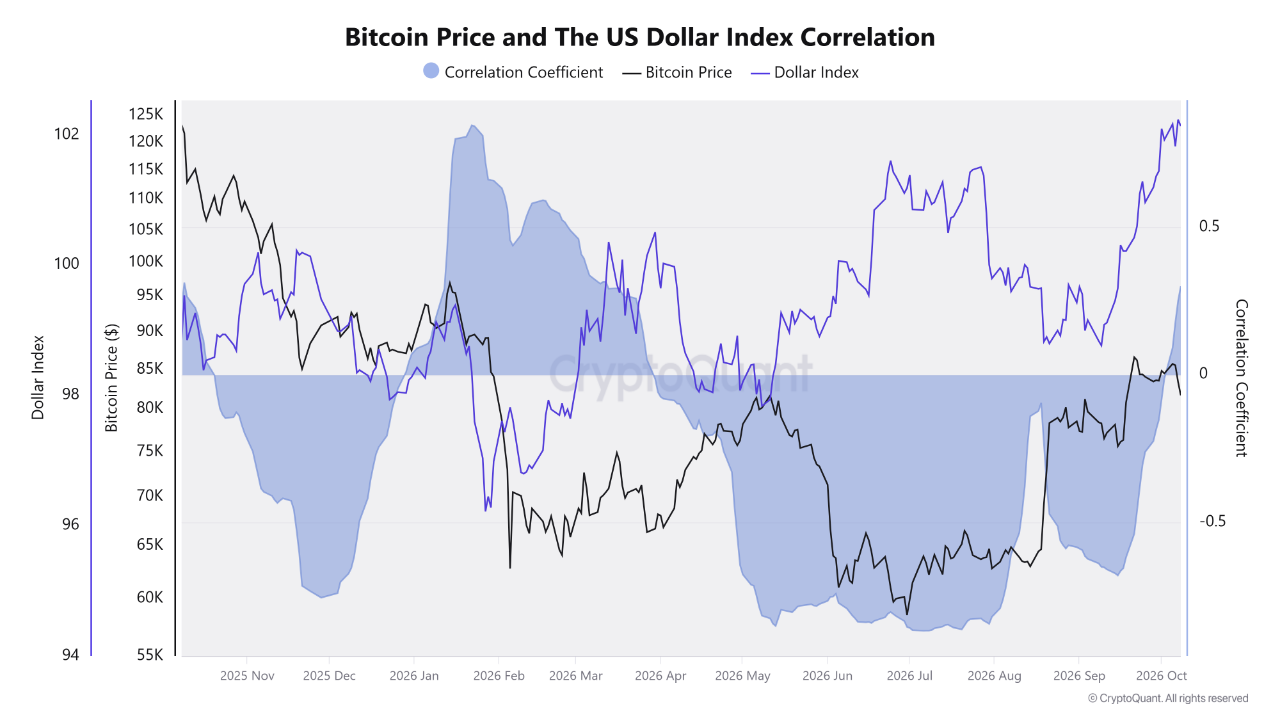
The analysis emphasizes that Nasdaq, the dollar, and gold explain only about one-third of Bitcoin’s daily moves. The two comparable periods in the past are also considered insufficient to make a reliable probability estimate about what will happen next.