
Bitcoin Rebounds Above $83,000 After Sharp Drop: All Eyes on Key Data

After falling to around $81,000, Bitcoin climbed back above $83,000 as investors watched the market’s direction ahead of U.S. inflation data.
According to data reported by CoinDesk, Bitcoin (BTC) recovered and climbed above $83,000 after dipping to the $81,000 area around 03:50 Turkey time on October 13. The move in cryptocurrencies came as selling continued in South Korean stocks and U.S. technology stock futures.
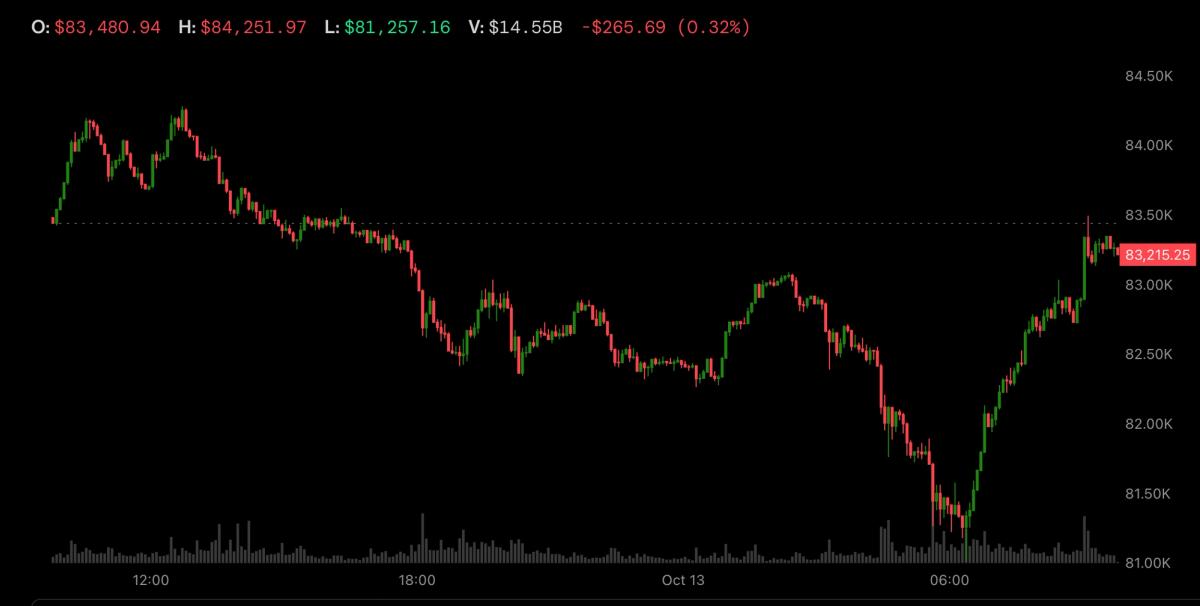
Ethereum and altcoins also rebound from lows
Ethereum (ETH) rose from five-day lows, while XRP turned higher after hitting its lowest level in three weeks. Zcash (ZEC) and Solana (SOL) also posted similar recoveries.
The rebound following the sharp sell-off in Bitcoin and altcoins earlier in the day provided short-term relief for prices.
Selling continues in stock markets
South Korea’s KOSPI index fell more than 6% during the day, dropping below 6,000 points to its lowest level since late July. The index was also down about 6% in morning trading.
Chipmakers Samsung Electronics and SK Hynix lost about 8%, extending their losing streaks to a fifth session. Concerns about valuations of artificial intelligence companies and competition from Chinese memory chipmakers were among the main drivers of the sell-off. Nasdaq futures fell 0.6%, while the technology-heavy index had closed Monday down 0.78%.
Institutions may hedge rather than sell ahead of inflation data
Oil prices also remained elevated. WTI was around $92.67, while Brent was at $106. New attacks in Saudi Arabia and threats to maritime traffic in the Strait of Hormuz increased uncertainty over energy supplies. The Dollar Index was around 102.50, near its highest levels since April last year.
As the impact of high energy prices on inflation came into focus, the key item on the crypto market’s agenda was the U.S. Consumer Price Index (CPI), due Thursday.
Paul Howard, senior director at market-making firm Wincent, said institutional investors may prefer to hedge against a downturn through derivatives ahead of the data rather than significantly reduce their crypto holdings. According to Howard, institutions may guard against potential volatility while maintaining their core positions.