
Ethereum Exit Queue Quintuples in Three Days: What’s Behind the Year’s Peak?

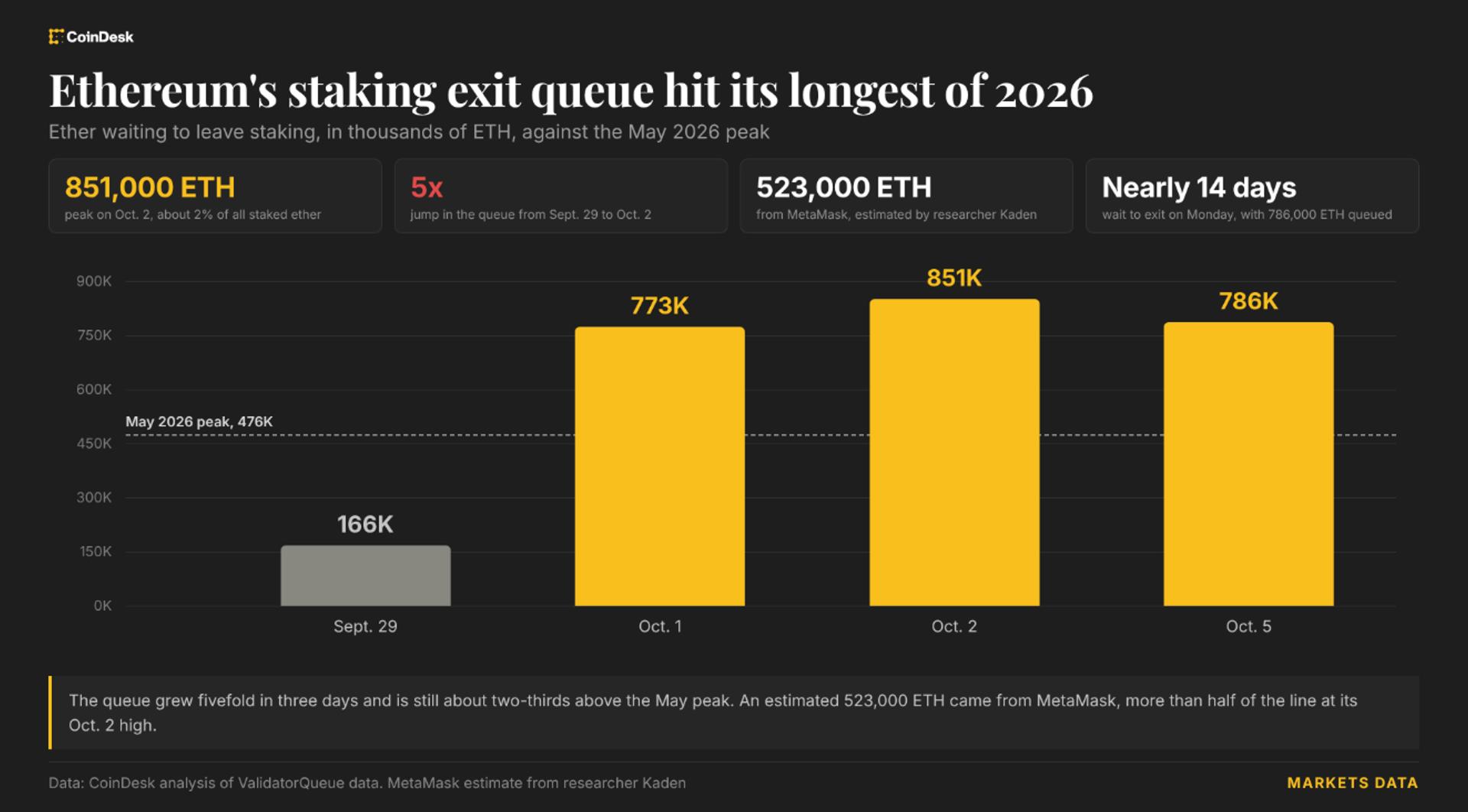
The amount of ETH waiting to exit staking on Ethereum more than quintupled in three days, reaching a yearly peak on October 2, with most of the increase stemming from MetaMask temporarily deactivating its validators after a security incident.
According to CoinDesk’s analysis of the data, the exit queue rose from about 166,000 ETH on September 29 to 851,000 ETH on October 2. Surpassing the roughly 476,000 ETH level seen in May, the queue reached its highest point of 2026.
As of the morning of October 5, the amount waiting to exit had fallen to 786,000 ETH. The estimated wait time for this amount, worth approximately more than $2 billion, was approaching 14 days.
MetaMask security measure swells the queue
MetaMask, known for its crypto wallet, also operates validators for Lido, which pools users’ ETH and puts it into staking. Following the security incident it announced on September 30, the company began deactivating the affected validators.
In its October 1 statement, MetaMask said its investigation had found no evidence that wallets or customer funds were affected. Most of the increase in the exit queue is linked to this operator’s precautionary measure; Lido expects the withdrawn ETH to be staked again as the process is completed.
Ethereum limits the rate at which validators can enter and exit to prevent sudden changes in network security. Under the current limits, about 57,600 ETH can enter each day, with the same amount able to exit. Large movements therefore create queues; coins exiting staking must also go through a separate withdrawal process before reaching wallets.
Returning to staking could take up to 45 days
According to Lido’s estimate, the last affected MetaMask validators are expected to exit staking by October 7. Once the balances are withdrawn and the ETH is placed back in the entry queue, the entire process could take up to 45 days. Validators will not earn staking rewards while inactive.
Lido also said that holders of stETH, which represents users’ shares in the service, do not need to take any action.
Those looking to stake are also waiting 25 days
On the entry side, about 1.5 million ETH, or roughly $4 billion in assets, is waiting in the queue. The estimated time for new validators to become active is 25 days.
At the beginning of September, the entry queue reached about 2 million ETH, with a wait time of 35 days. So while exits have seen a spike linked to the security incident, the amount waiting to enter staking is down compared with early September.