
Stress in U.S. Treasuries Is Rising: Is Bitcoin’s Calm a Sign of Strength?
Expected volatility in the U.S. Treasury market has climbed to its highest level since March, while Bitcoin options show no similar signs of unease. This divergence raises questions about Bitcoin’s resilience in the face of mounting financial pressure.
According to data reported by CoinDesk, the MOVE index, which measures expected volatility in U.S. Treasury bonds, rose to 104 on Thursday from around 80 on Tuesday. The indicator, which reached 199 in March, has now climbed to its highest level since that month.
By contrast, the 30-day volatility expectation BVIV derived from Bitcoin options remained near 37, close to its year-to-date low of 35. The VIX, which measures expected volatility in the S&P 500, also remained near its annual lows. This calm does not mean prices have stopped moving; it means the volatility expected by options markets has remained low.
Why Does Stress in the Treasury Market Matter for Bitcoin?
U.S. Treasury bonds are among the foundational instruments of the global financing and credit system. According to CoinDesk’s assessment, rising volatility in this market can tighten financial conditions and reduce investors’ willingness to take risks. Yet the absence of expectations for comparable volatility in Bitcoin and stocks is interpreted in the analysis as a sign of resilience.
According to the source, the U.S. 10-year Treasury yield briefly reached 5.2% on Thursday. The war in the Middle East is pushing energy prices higher, increasing uncertainty about inflation and how much further central banks will tighten policy.
The Indicators Are Not Moving in the Same Direction
The report puts the correlation between MOVE and VIX at −0.06, and the correlation between MOVE and Bitcoin’s BVIV volatility indicator at −0.37. The first figure is very close to zero and therefore does not indicate a strong inverse relationship. The second is described by the source as one of the lowest readings in recent years. This comparison examines the relationship between volatility indicators, not price returns.
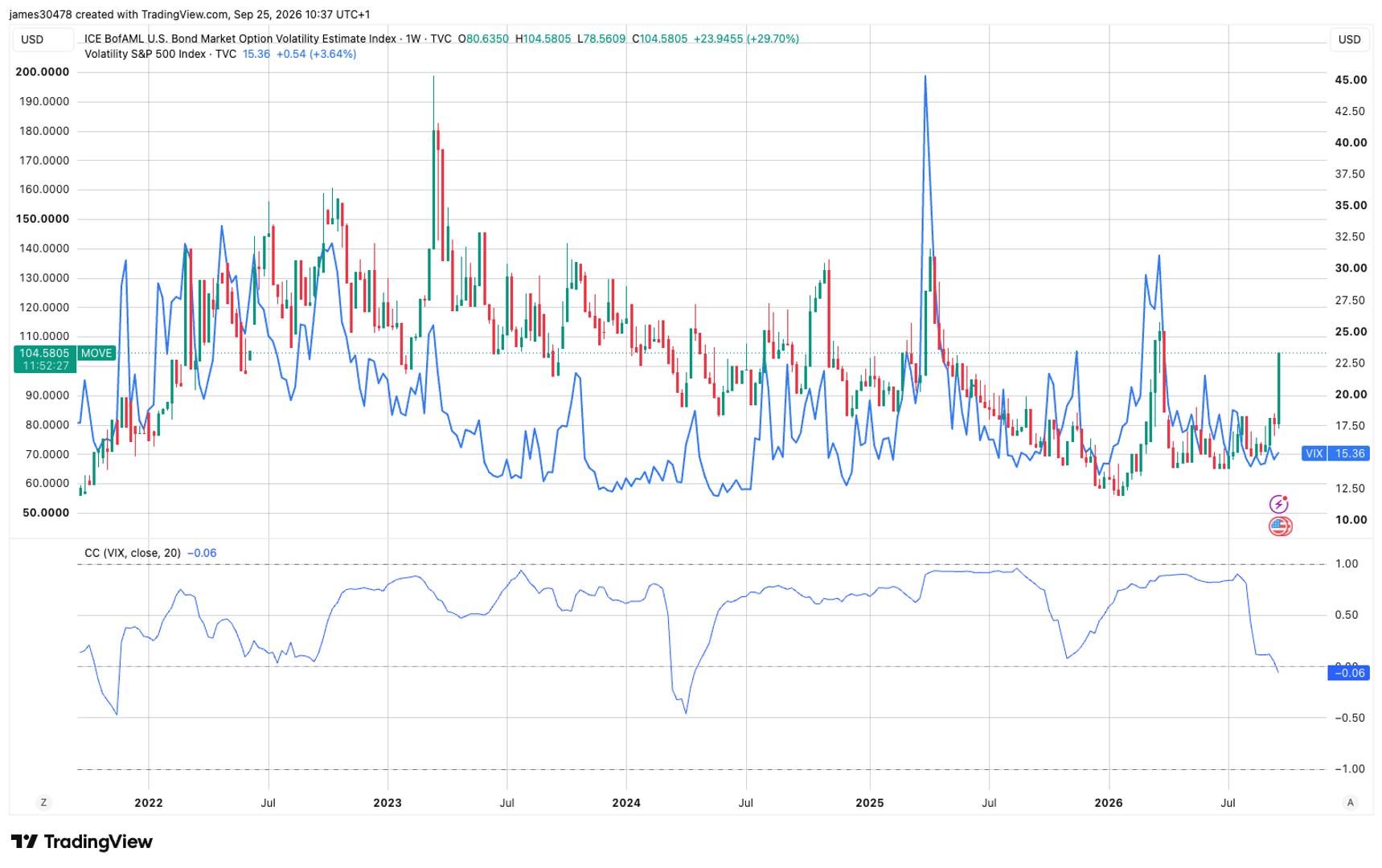
In March, when MOVE was at similar levels, the S&P 500 stood at around 6,350 points. The index subsequently rose by about 21% to 7,704. Despite the current unease in the Treasury market, expected volatility in stocks and Bitcoin remains low; however, this alone does not indicate a new price rally or that risks have disappeared.